
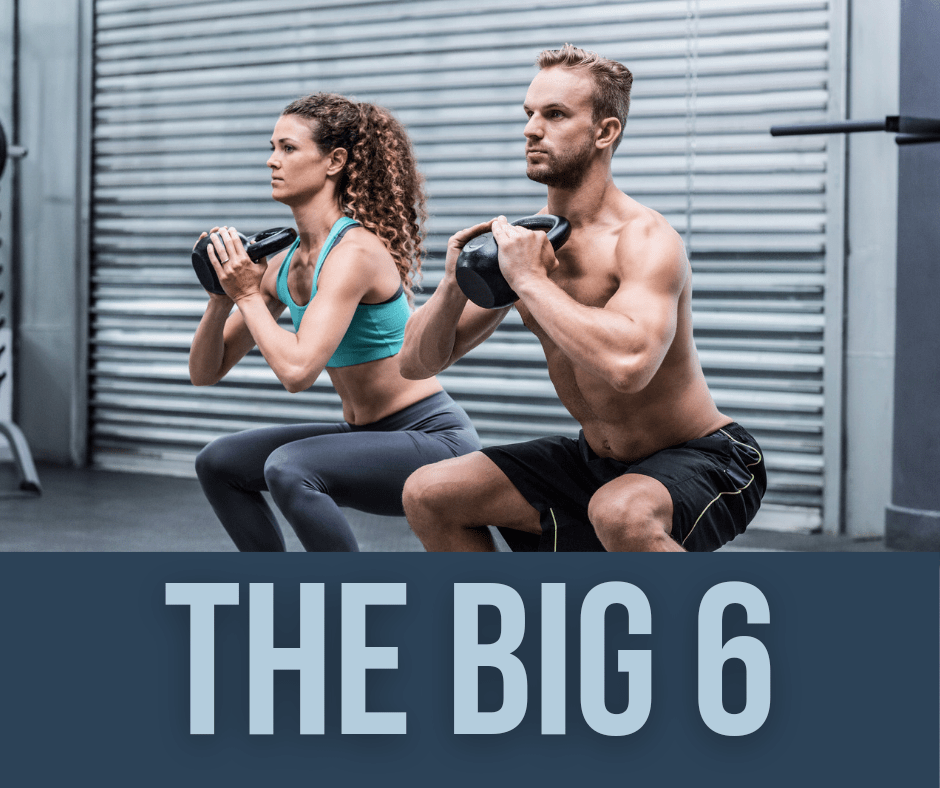
Are you new to Fitness and Exercise? Do you ever get confused or overwhelmed about what exercises you should be doing for a stronger, healthier body? Even if you’ve been in the game for a while, there’s alot more to training than bodybuilding and brosplits. If you want to learn which exercises to incorporate into your training for real world, functional Strength then read on!
Every day more people are hopping onto the fitness bandwagon. This is great because Fitness is becoming more mainstream, with being healthy becoming increasingly popular. New information about exercise and training is becoming more available to people globally, and with the rise of Social Media and it’s influencers it can be easy to drown in information overload. Especially if you’re a fitness newbie.
Luckily I’ve found that the best and most effective training methods are the simple ones. Simple training means clear cut goals and if your goals are to build athleticism, muscle and get stronger then the six exercises below should form the foundation of your training regime. These are compound, multi joint exercises that will give you the most benefit in your training while using up less of your time.
#1 The Squat

Squats reign supreme in the exercise world for their ability to build strength and athleticism. Every person NEEDS to be squatting to maintain a healthy, functional body! The squat is a foundational movement that all regular people are born with. Toddlers can squat ass to grass with ease, and if you’re finding it hard to squat low then you’ve lost some important mobility that you were born to have. How do you think Cavepeople used to poop – by squatting!
Luckily, the squat builds Active Flexibility and increases the Mobility of your Hips, Knees and Ankles. With patience and hard work it’s possible to restore your squat through deep Squat drills and hip and ankle mobility exercises. It’s worth the effort.
Squats, especially deep Squats, will build muscle and strength through out you lower body while keeping your range of motion healthy and strong. There’s nothing better for your legs than ass to grass Squats.
#2 Lunges.

Lunges are the close relative of the Squat, working the legs while training them individually (known as unilateral training). This is awesome because it helps prevent muscle imbalances from creeping in, which over time can lead to an injury. Lunges bullet proof your Squats and allow you to build strength with less mobility (if you find it hard to squat). The Lunge will also test your balance and stability of your Ankle, Knee and Hip.
Never let your knee cave inwards while lunging, always make sure your foot and ankle is in an active, solid position and your hip and glutes are torqued and engaged.
#3 Hinge

Arguably the movement pattern that I see my clients battle with the most. The hinge is one of the most powerful movements that the human body is capable of because it recruits the posterior chain in full force. Unfortunately it is also the movement that causes the most injury.
Successfully performing a Hinge Movement such as a Deadlift or a Kettlebell Swing requires the body to bend at the hips (like the hinge on a doorframe) and not the spine. Learning to hinge properly while bracing the core muscles effectively can be a challenge but is a worthy pursuit.
The hinge builds strength that allows you to lift and move load without injuring your spine and targets the extremely powerful but often neglected muscles of the posterior chain (back of the body). Start small with this one, but start.
#4 Push

The shoulder is extremely mobile and needs to be trained through different ranges of motion to efficiently build strength and stability around the joint.
There are two types of functional Push movements, Vertical Pushes and Horizontal Pushes. The Vertical push (eg. The shoulder press) are generally performed over head (with the exception of Dips) and primarily focuses on raw Shoulder Strength and Activation (again, with the exception of Dips where you get a ton of Chest Activation). Horizontal Pushes such as the Push up or Bench Press put more emphasis on the Chest muscles.
Both types of Push movements are important for healthy, stable and shoulders. Pushing also causes strength and muscle building adaptations in the Shoulders (Deltoids), Chest and Triceps.
#5 Pull
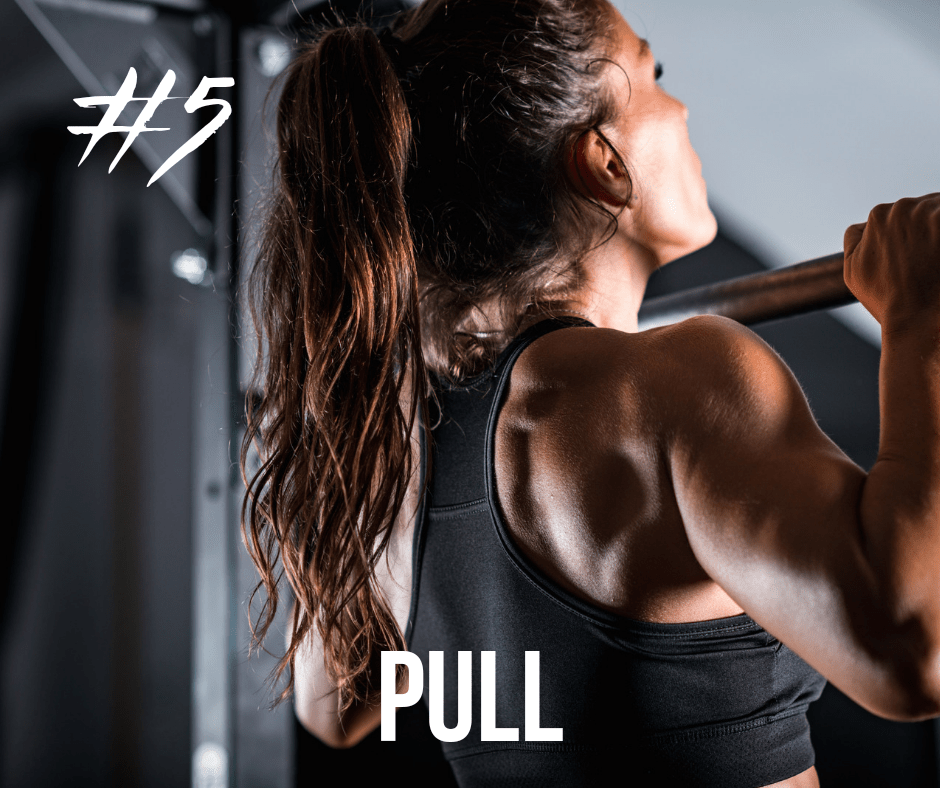
The polar opposite of the Push is the Pull. The two compliment eachother by building balance among the muscles of the shoulders. Like the Pushes, Pulls are also divided into Vertical and Horizontal movements, and incorporating these into your training strengthens Scapular stability and control and improves posture. Both Pull movements are great for strengthening and building muscle in the Lats, Biceps, Rhomboids and Trapezius muscles.
Horizontal Pulls are a great place to start because they’re easier to learn and don’t require as much strength as a Verticle Pull. A Horizontal Pull is, generally speaking, any type of Row. Rows are great for teaching Scapular Depression and Control. These should be a staple for any good strength training regime.
Vertical Pulls such as the Pull up or Scapular Pull up trains the body in the Hanging position, which actively Stretches out your spine and shoulders. When done properly this can be great for fixing and preventing rounded shoulders, a problem thats becoming increasingly common with all the sitting the average person does during the day. If you don’t have the strength for Pull ups or Scapular Pull ups the don’t fret. Start small by training the Lat Pull Down and Dead Hangs until you’re more confident.
Shoulder mobility and flexibility can be greatly improved just by hanging for a few minutes every day. If you sit most of the day hunched over a desk, then hanging is a must for your shoulders!
#6 Carry

Most people, most of the time, end up carrying something some time during their day. It could be your child, the groceries, a suitcase or even a dead body… hopefully not that latter, but you get the picture.
The Carry is any exercise that will challenge your core and hip stability while moving under load. These can be done bilaterally (weights evenly distributed on both sides of the body) or unilaterally (where load is placed primarily over one side of the body. Both are important.
Bilateral Carries will give you a chance to really focus on your grip strength, Scapular compression and Hip stability. Unilateral Carries will do this too, but with alot more emphasis on core stability.
Carries also don’t just need to be done with the weights loaded like suitcases at the sides. You can spice up the Carry in your training by doing Front Rack Carries (great with barbells or Kettlebells), yoke carries (like the strongmen do) or by crawling with a weight on your back – these variations bring their own unique benefits to the table by challenging yourcore stability in different ways!
Are you using any of these 6 functional movements in your training? Combining the Squat, Lunge, Hinge, Push, Pull and Carry will not only add almost endless variation to your workouts, but will also take your training to the next level! Let me know your thoughts on these functional Movement patterns in the comments below!

 Pump'd Fitness